When the aircraft first arrived in Vero Beach, they didn’t do it quietly. I remember looking up from the neighborhood and seeing jets pass overhead, low and tight, almost as if they were announcing their presence before the weekend even began. That first practice run—planes cutting across rooftops and treetops—set the tone. This wasn’t something happening off in the distance at an airfield. It had arrived, unmistakably, right where we live. From that moment on, the air above Vero Beach felt different—alive, active, and purposeful.
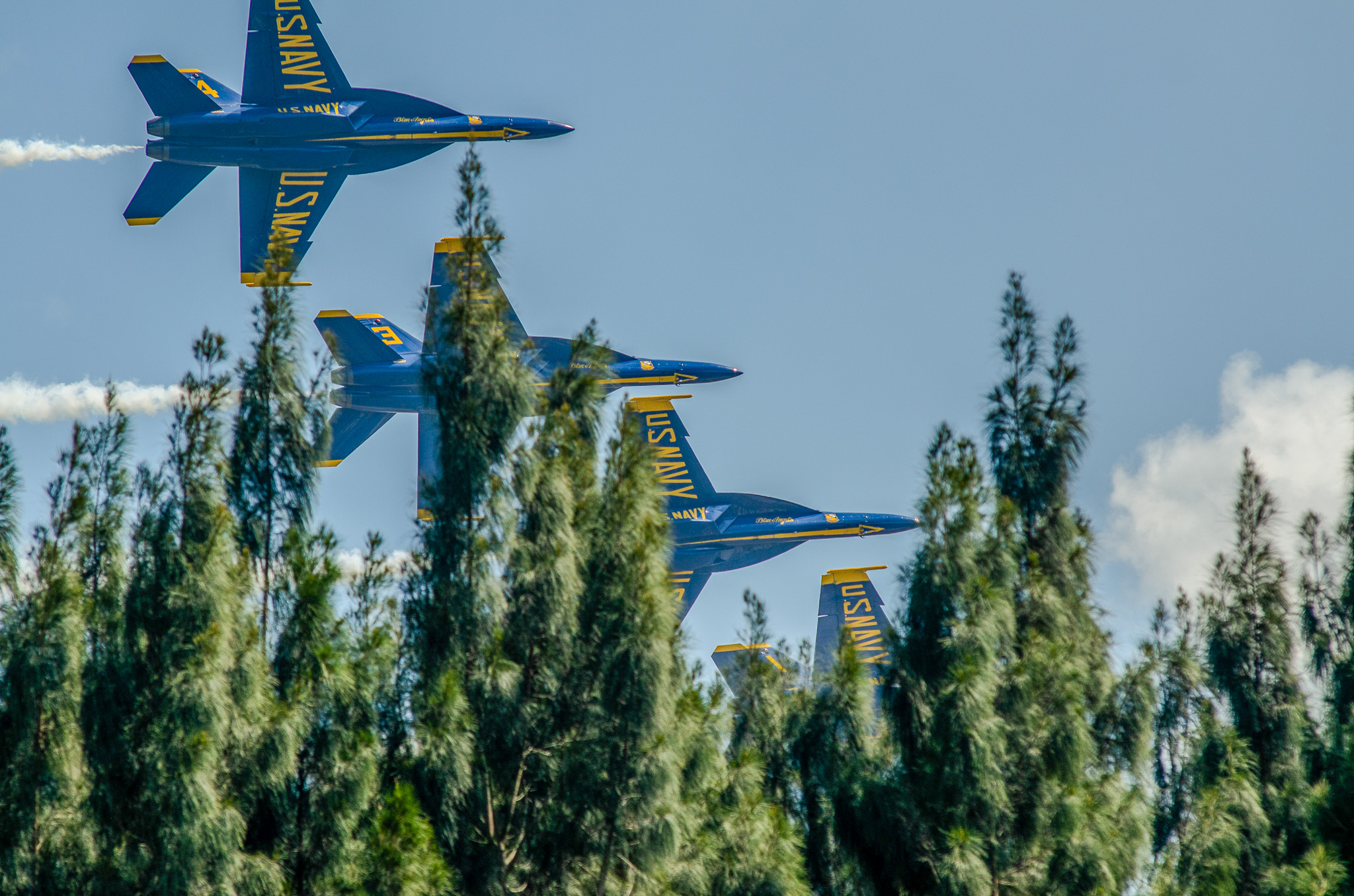
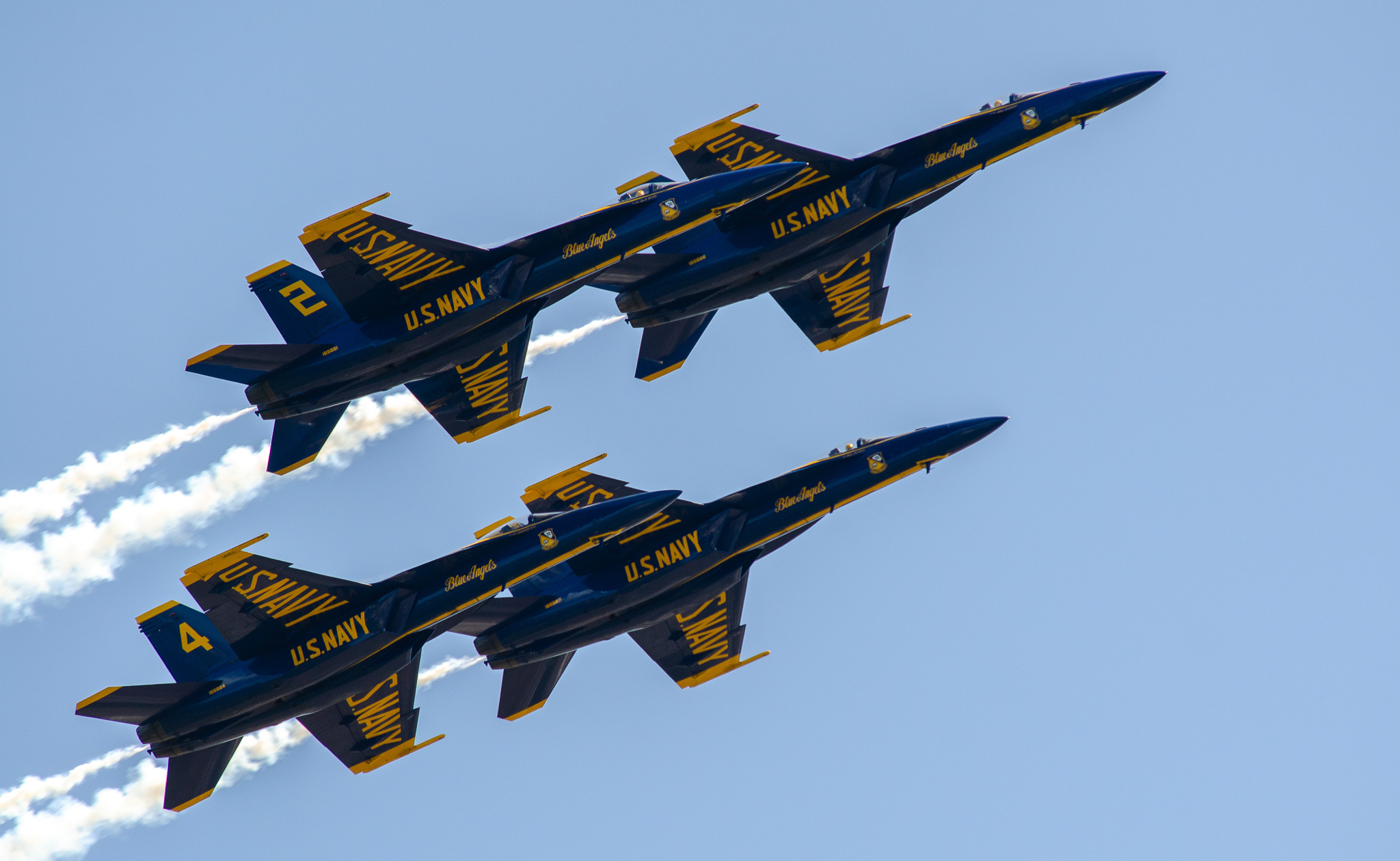
As the weekend unfolded, the range of aviation on display became clear. Older aircraft carried the marks of their era—simple lines, visible rivets, and a kind of mechanical honesty that spoke to the early limits of flight. Modern jets, especially the U.S. Navy Blue Angels, showed the opposite end of that evolution: sculpted shapes, carefully managed airflow, and formations held with almost mathematical precision. From below, you could see the geometry at work—parallel flight paths, constant spacing, and energy controlled down to the smallest correction. The trees beneath them gave scale, a quiet reminder of just how exact and disciplined those low passes really were.
By the time Friday night arrived, the fireworks felt like a natural exhale—color and light filling the sky after a day of sound and motion. And on Sunday, as the Blue Angels flew their final formations, everything came together. What stayed with me wasn’t danger or spectacle, but control—across generations of aircraft, across styles of flying, and across the entire weekend. As a photographer, I came to capture moments. What I left with was a deeper appreciation for the progression of flight itself, from its earliest expressions to its most refined form. — Nick M
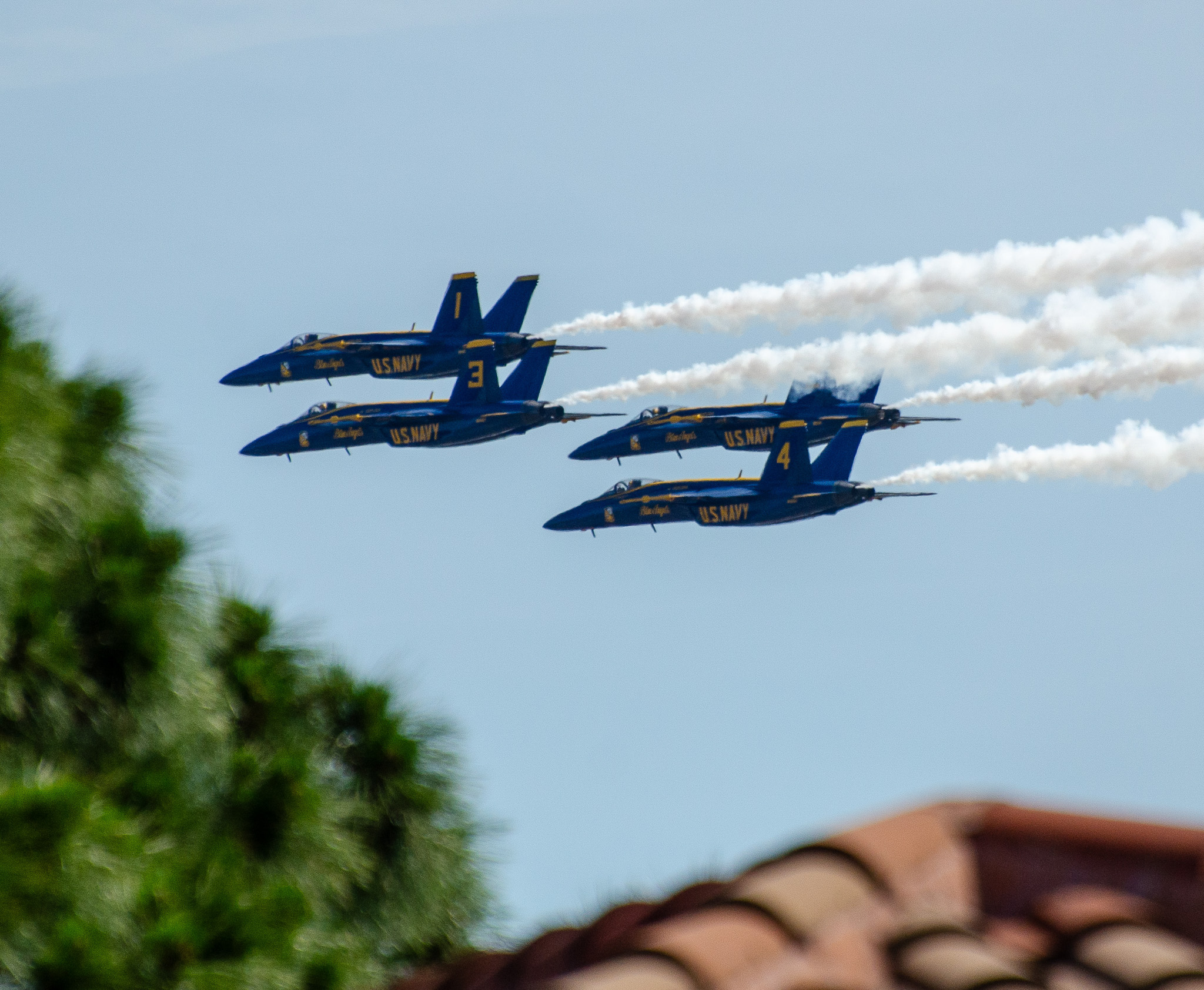
The U.S. Navy Blue Angels fly in close formation over a residential neighborhood on Thursday, announcing their arrival in town ahead of the 2024 Vero Beach Air Show. Trailing smoke and holding tight geometry, the jets offered a brief, unscripted preview of the precision flying to come as they transited to Vero Beach Regional Airport.
Vero Beach, Florida — May 202 Nick Murgo
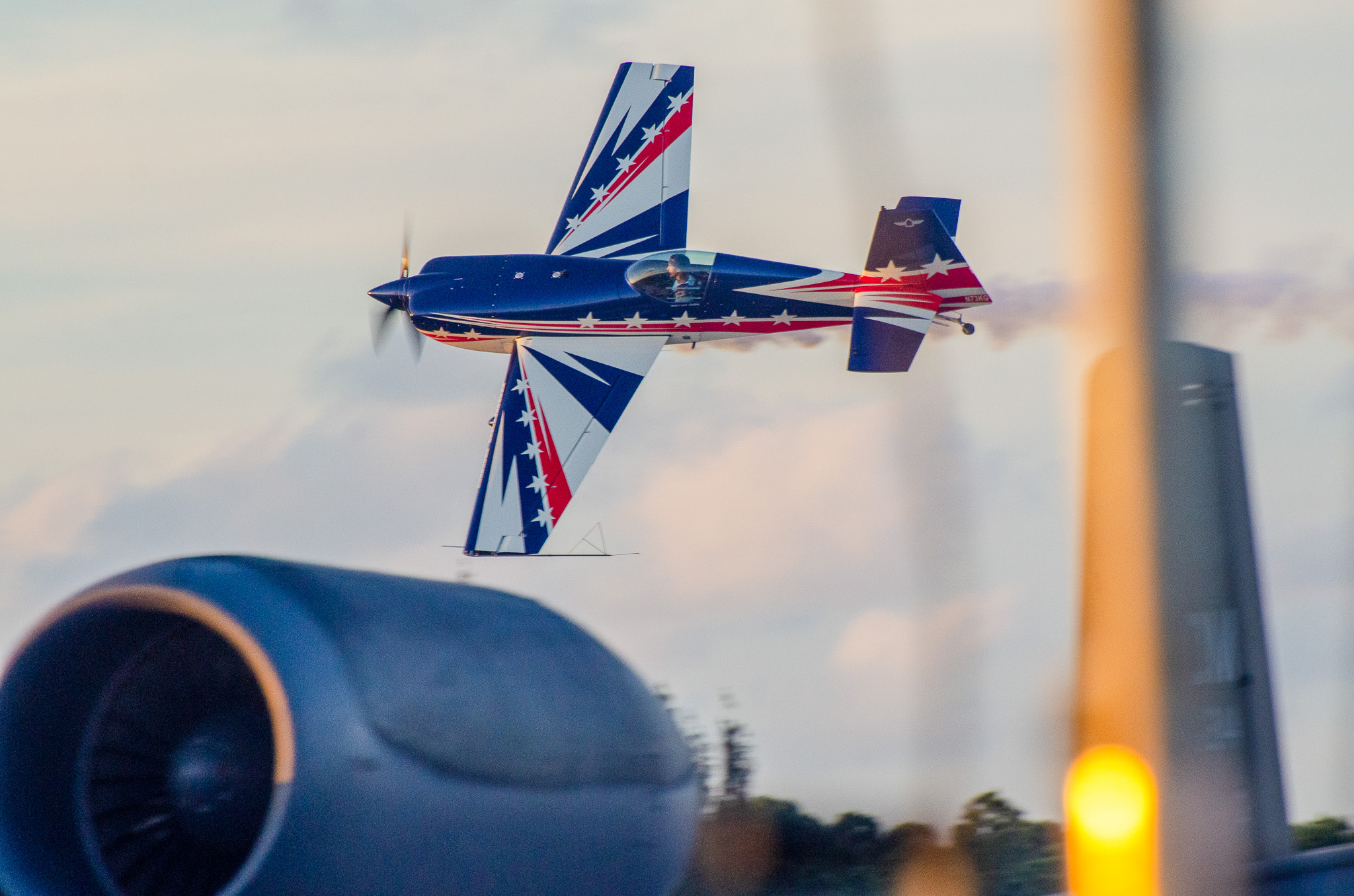
Aarron Deliu flies his Extra 330 during a dramatic high-energy pass at the Friday Night Air Show, part of the 2024 Vero Beach Air Show at Vero Beach Regional Airport. The patriotic livery and smoke trail were standout features of the opening-night aerobatic performance.
Vero Beach, Florida — May 202
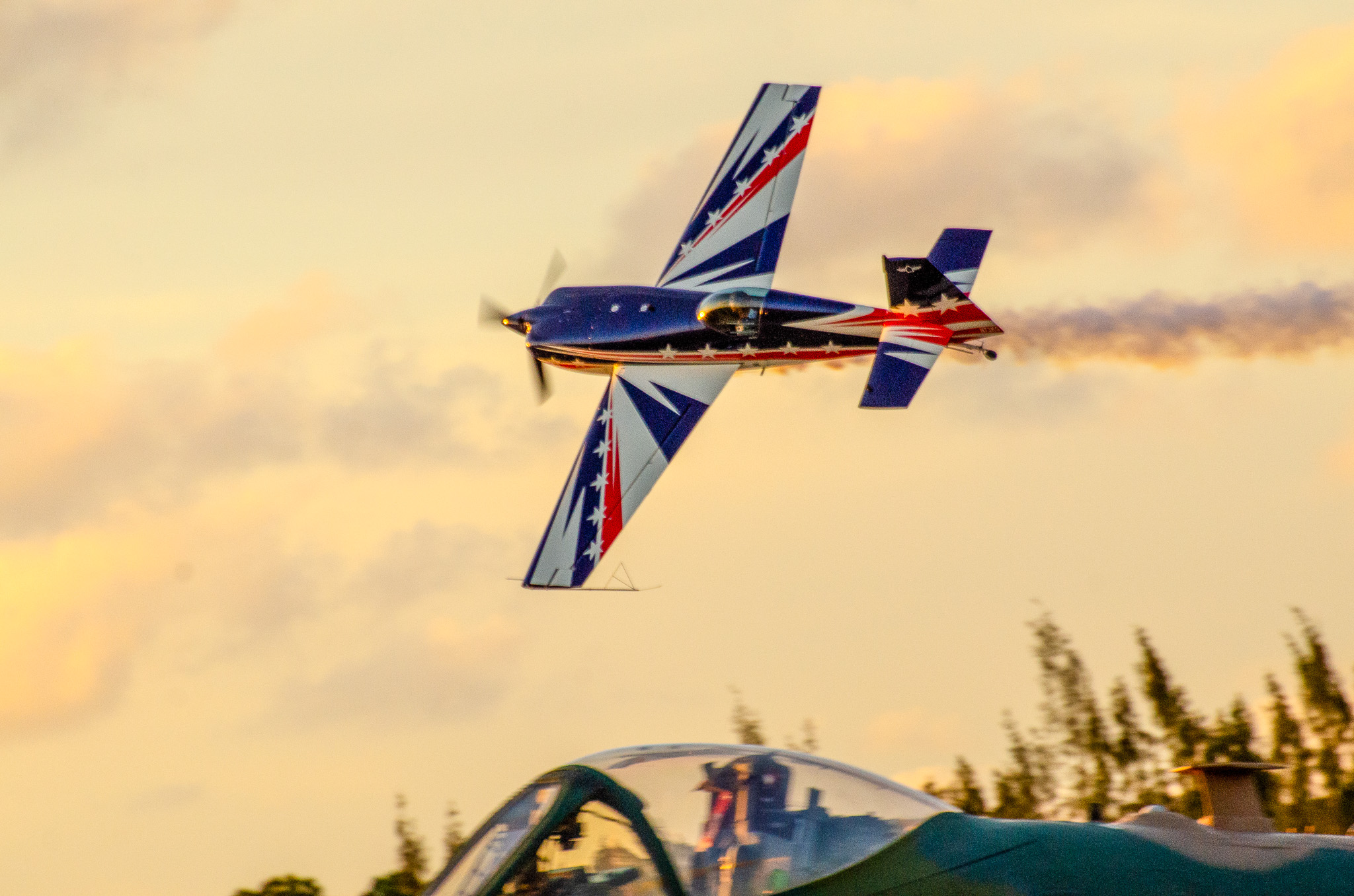
Dusky sunset paints a desert background while banking hard over the aircraft on the ground. Aarron Deliu banks low in his Extra 330 during a precision pass at the Friday Night Air Show at the 2024 Vero Beach Air Show. The patriotic paint scheme and close-in maneuvering made his opening-night performance a crowd favorite.
Vero Beach, Florida — May 2024
NICK MURGO 2024_VERO
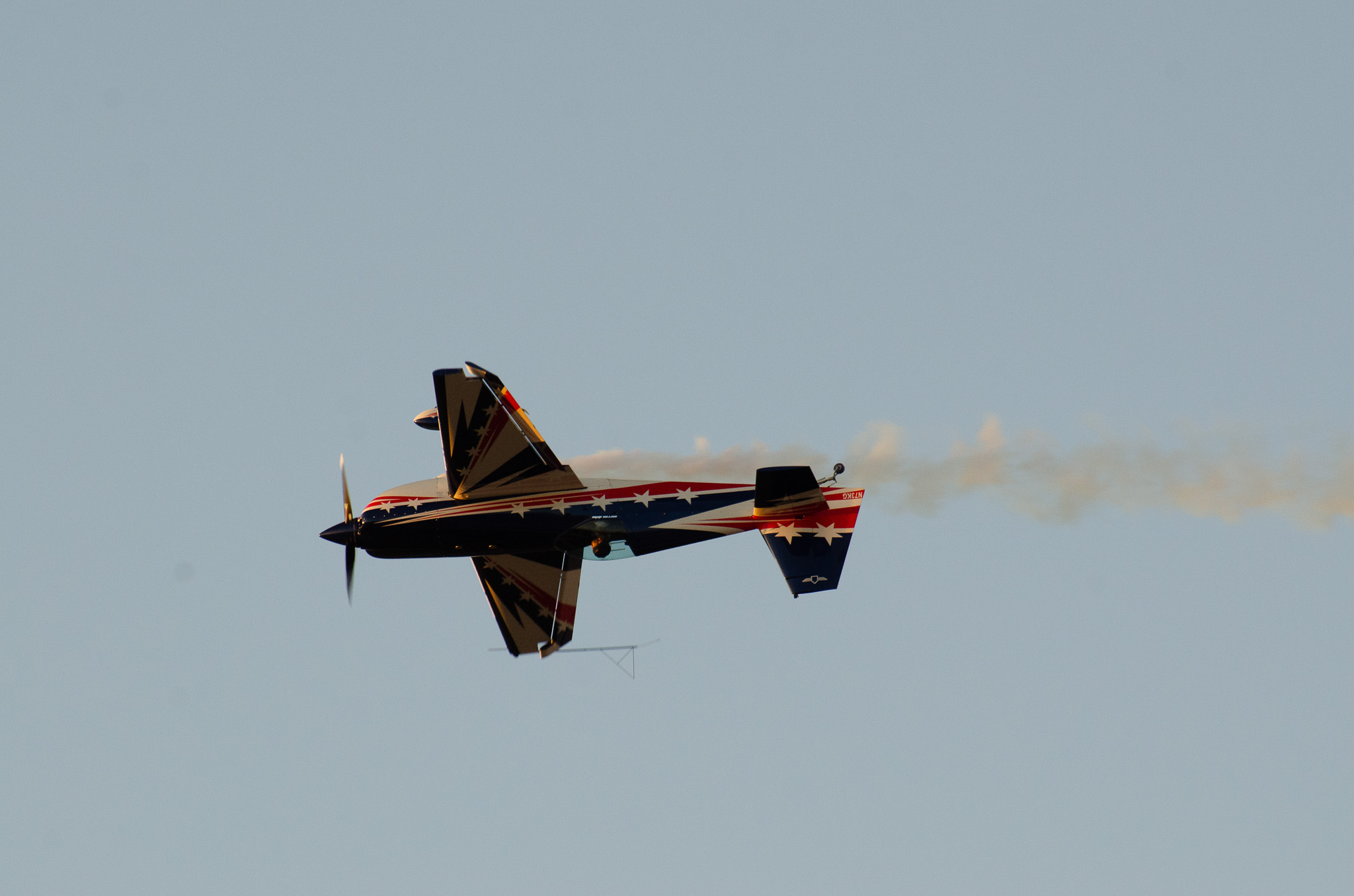
Aarron Deliu flies inverted in his Extra 330 during a precision pass at the Friday Night Air Show at the 2024 Vero Beach Air Show. The inverted maneuver highlights the aircraft’s agility and the pilot’s control under fading evening light.
Vero Beach, Florida — May 2024
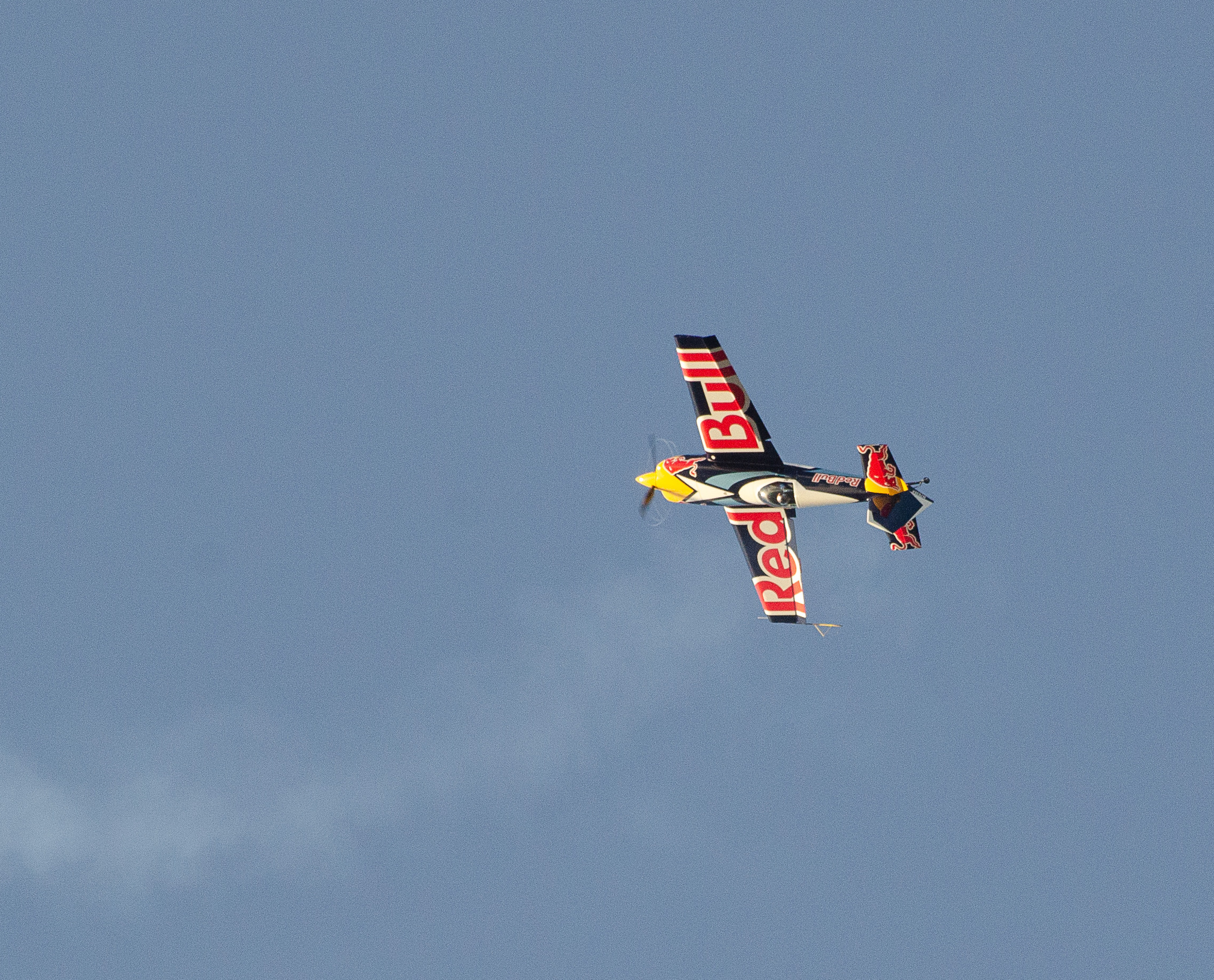
A Red Bull Edge 540 slices across the Vero Beach sky, its bold livery wrapping a purpose-built aerobatic aircraft designed for precision rather than speed. With roll rates measured in hundreds of degrees per second and control authority in every axis, the airplane reminds us that mastery of flight isn’t always about raw power — sometimes it’s about exactness, balance, and the pilot’s hands on the edge of the envelope
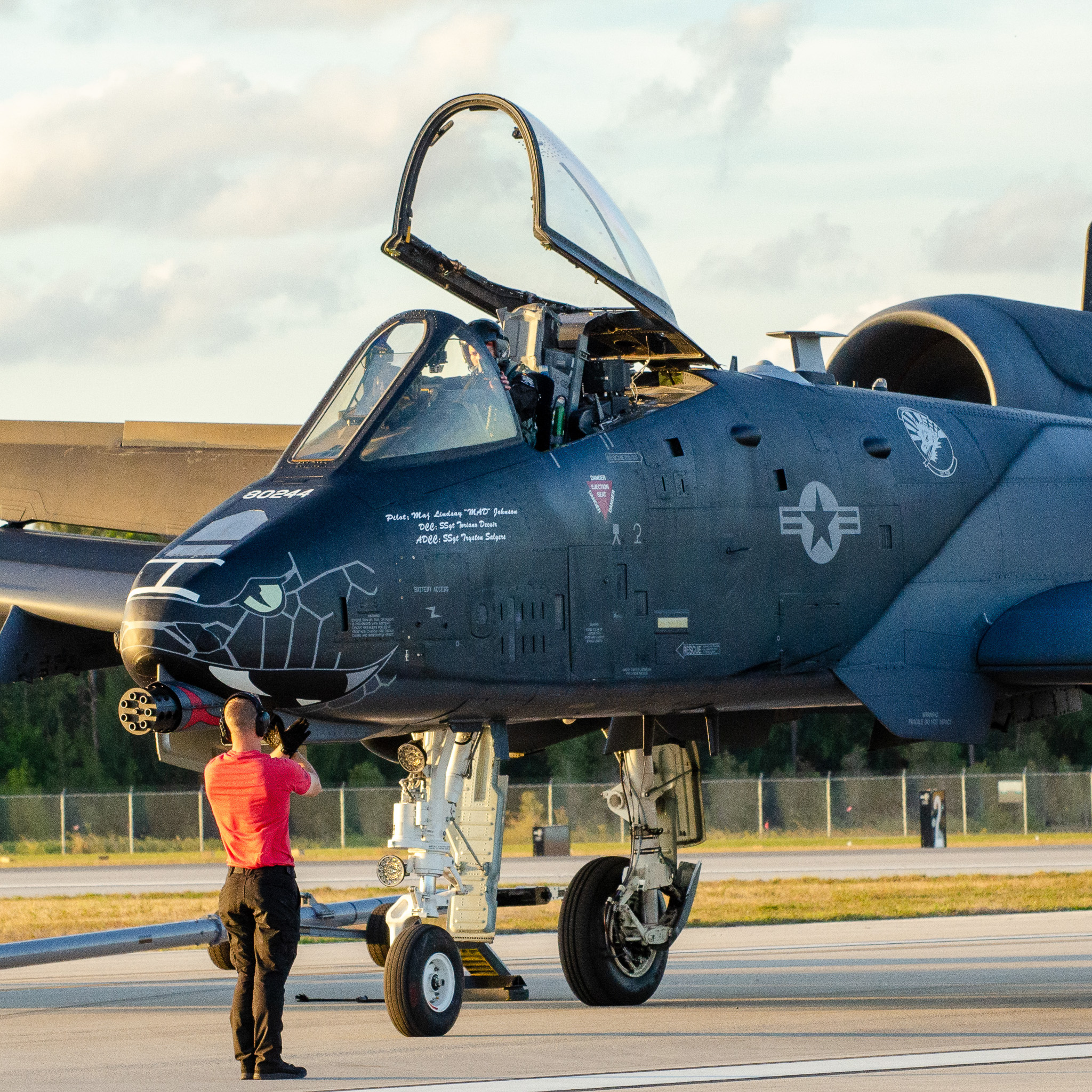
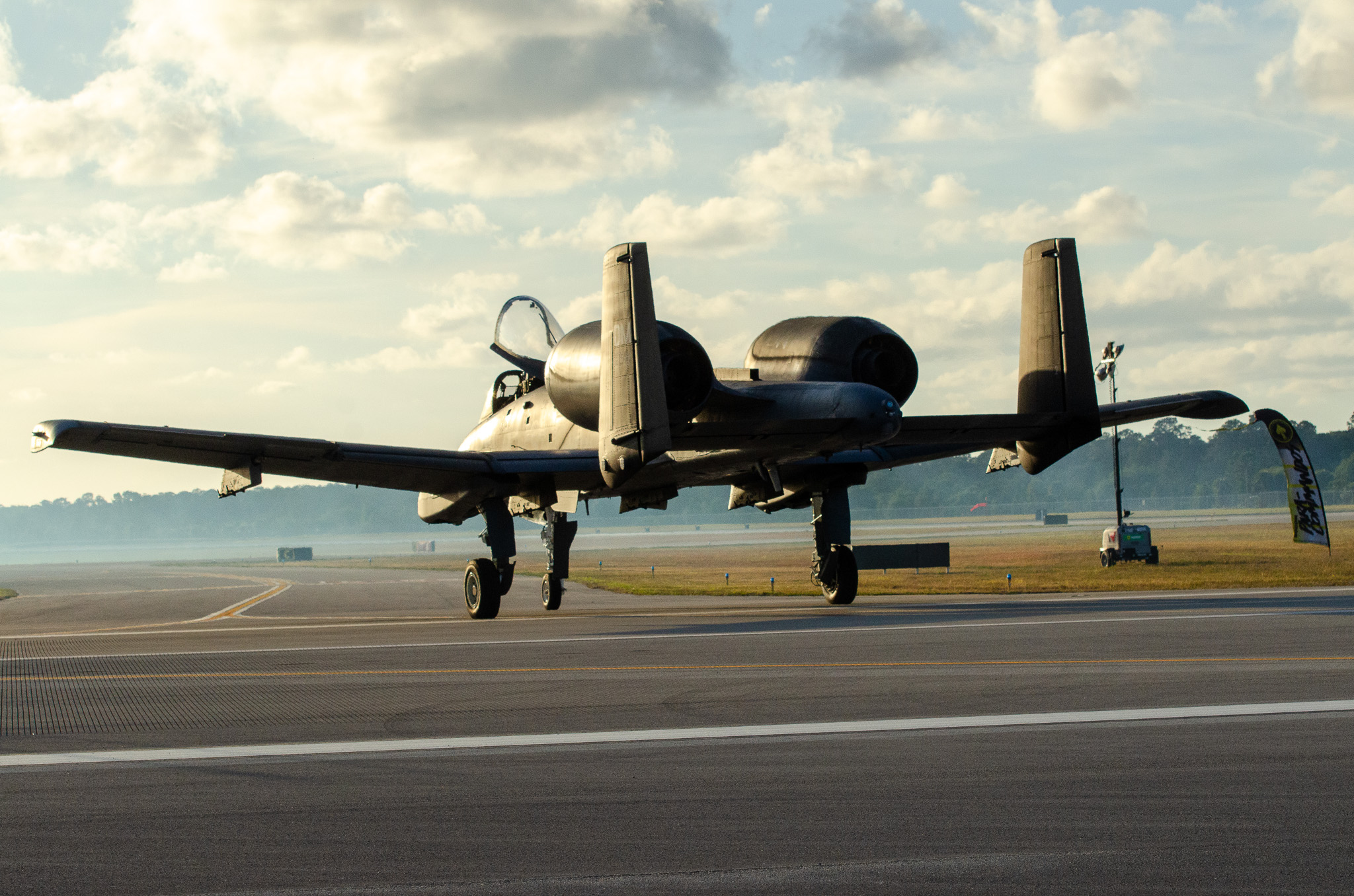
A A-10 Thunderbolt II “Warthog” sits on the ramp with canopy open prior to its demonstration at the 2024 Vero Beach Air Show. Crew markings beneath the cockpit identify Mary Lindsay “MAD” Johnson as pilot, with SSgt Tristan Devin listed as DCC and SSgt Trystan Salgado as ADCC. Designed for survivability and close air support, the A-10’s open canopy and GAU-8/A Avenger cannon underscore its enduring role in U.S. Air Force operations.
Vero Beach, Florida — May 202
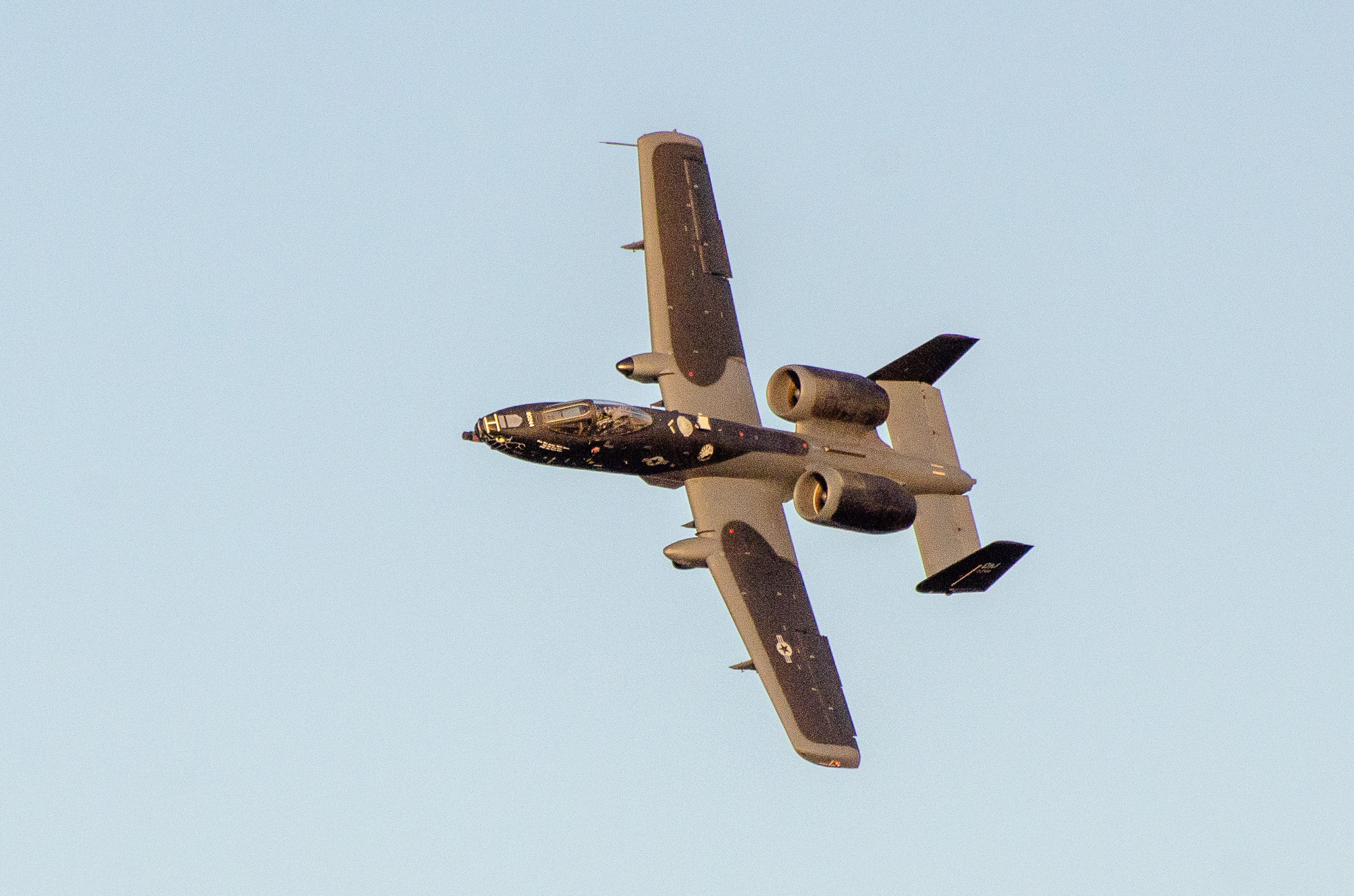
A A-10 Thunderbolt II “Warthog” banks through a low-altitude pass during its demonstration at the 2024 Vero Beach Air Show. Long celebrated for its survivability and close-air-support mission, the A-10’s appearance came during the final public demonstration season for the aircraft as the U.S. Air Force began winding down Warthog operations.
Vero Beach, Florida — May 2024 NICK MURGO
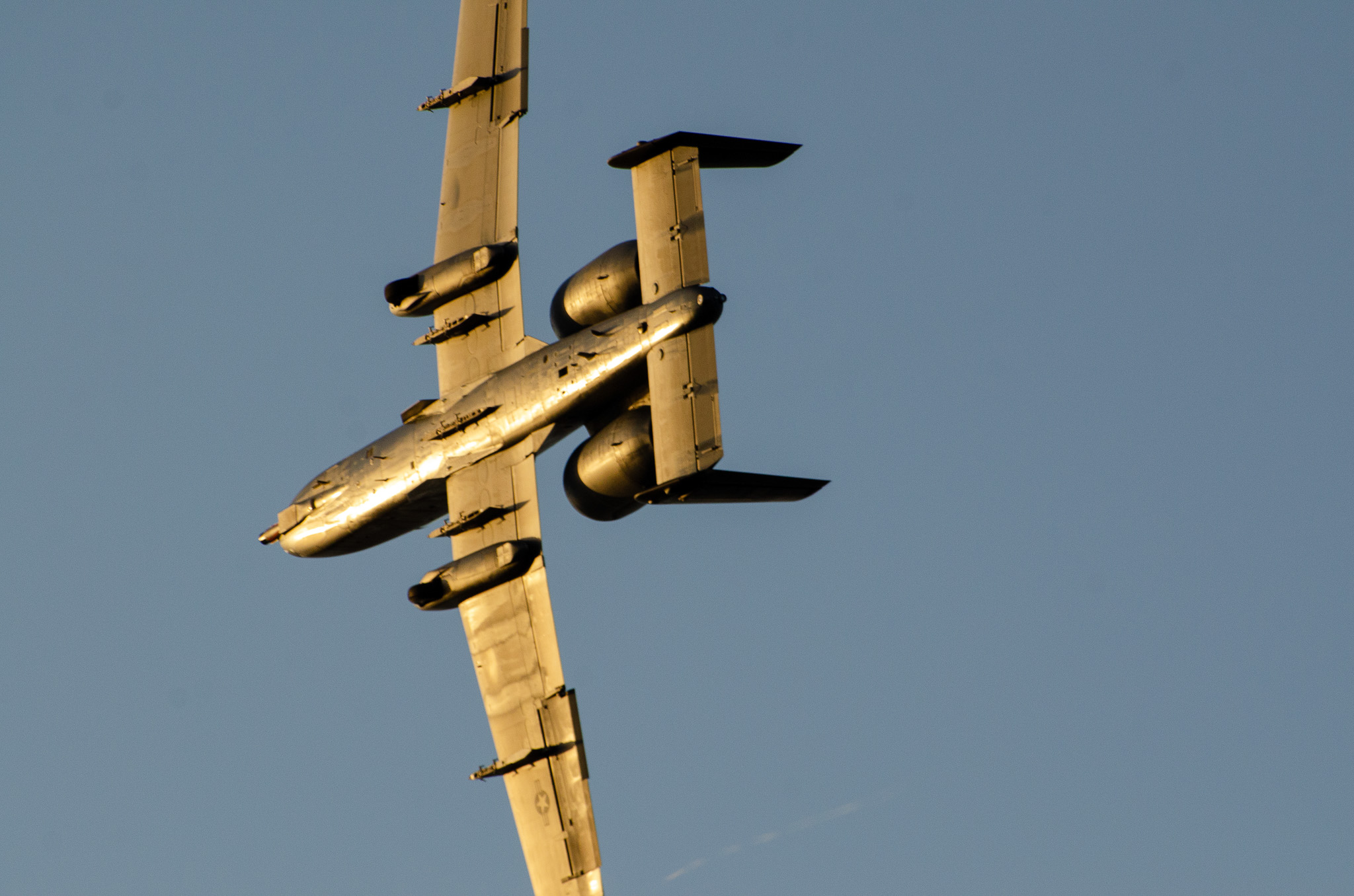
An A-10 Thunderbolt II “Warthog,” flown by Maj. Mary Lindsay “MAD” Johnson, rolls through a steep bank during its demonstration at the 2024 Vero Beach Air Show. Bathed in late-day light, the aircraft’s rugged underside and twin-engine nacelles highlight the A-10’s design focus on survivability and precision close air support during what would become the final public demonstration season for the Warthog. NICK MURGO 2024_VERO
Vero Beach, Florida — May 2024
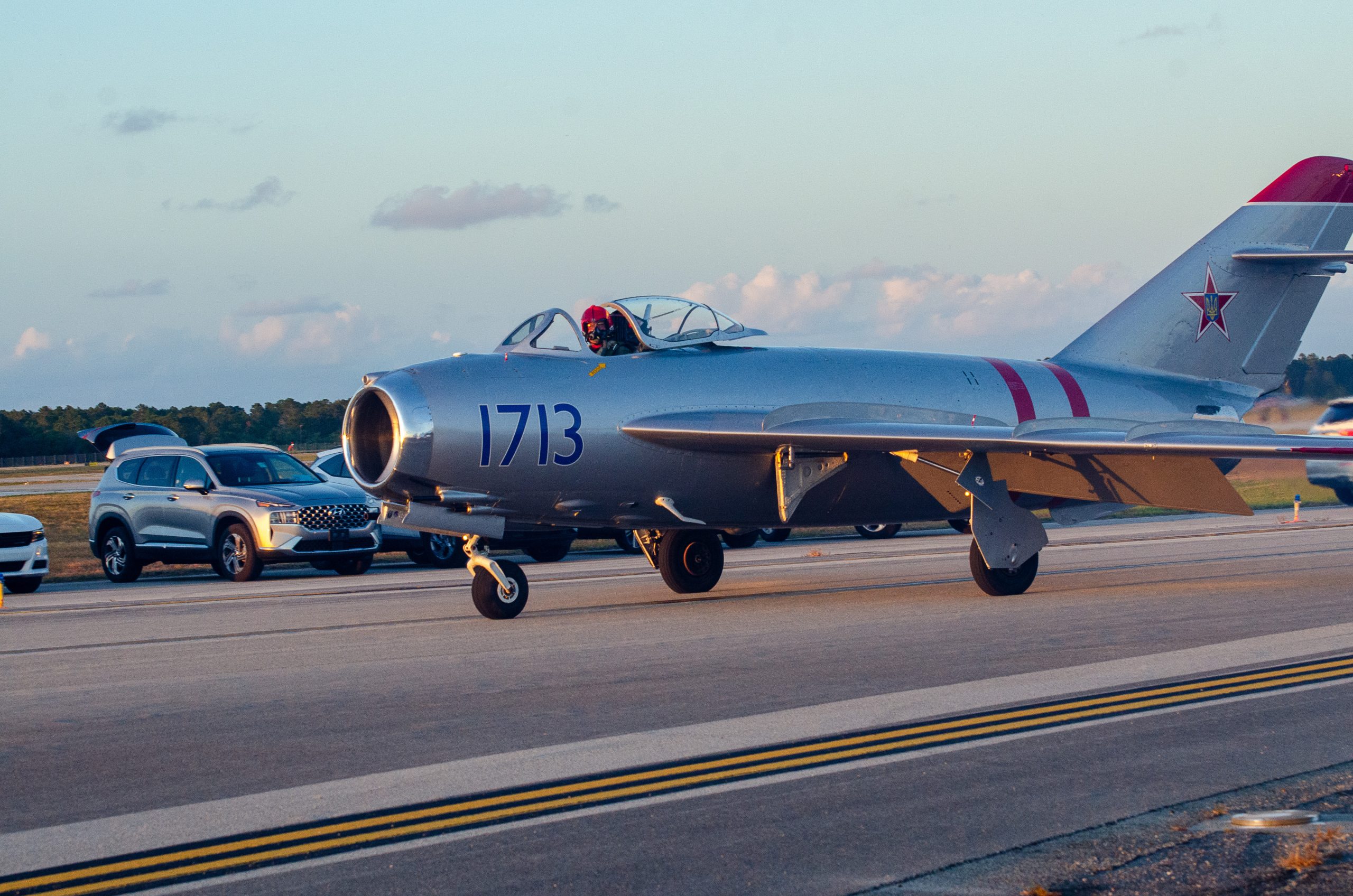
A MiG-17 Fresco taxis past with its pilot making eye contact before flight at the 2024 Vero Beach Air Show. The Cold War–era fighter was flown by Bill Culberson, whose demonstration highlighted the MiG-17’s compact design, distinctive nose intake, and raw jet-era performance. Seen up close on the ground, the aircraft offers a rare look at a type once flown by Soviet and allied air forces during the early jet age.
Vero Beach, Florida — May 2024 Nick Murgo
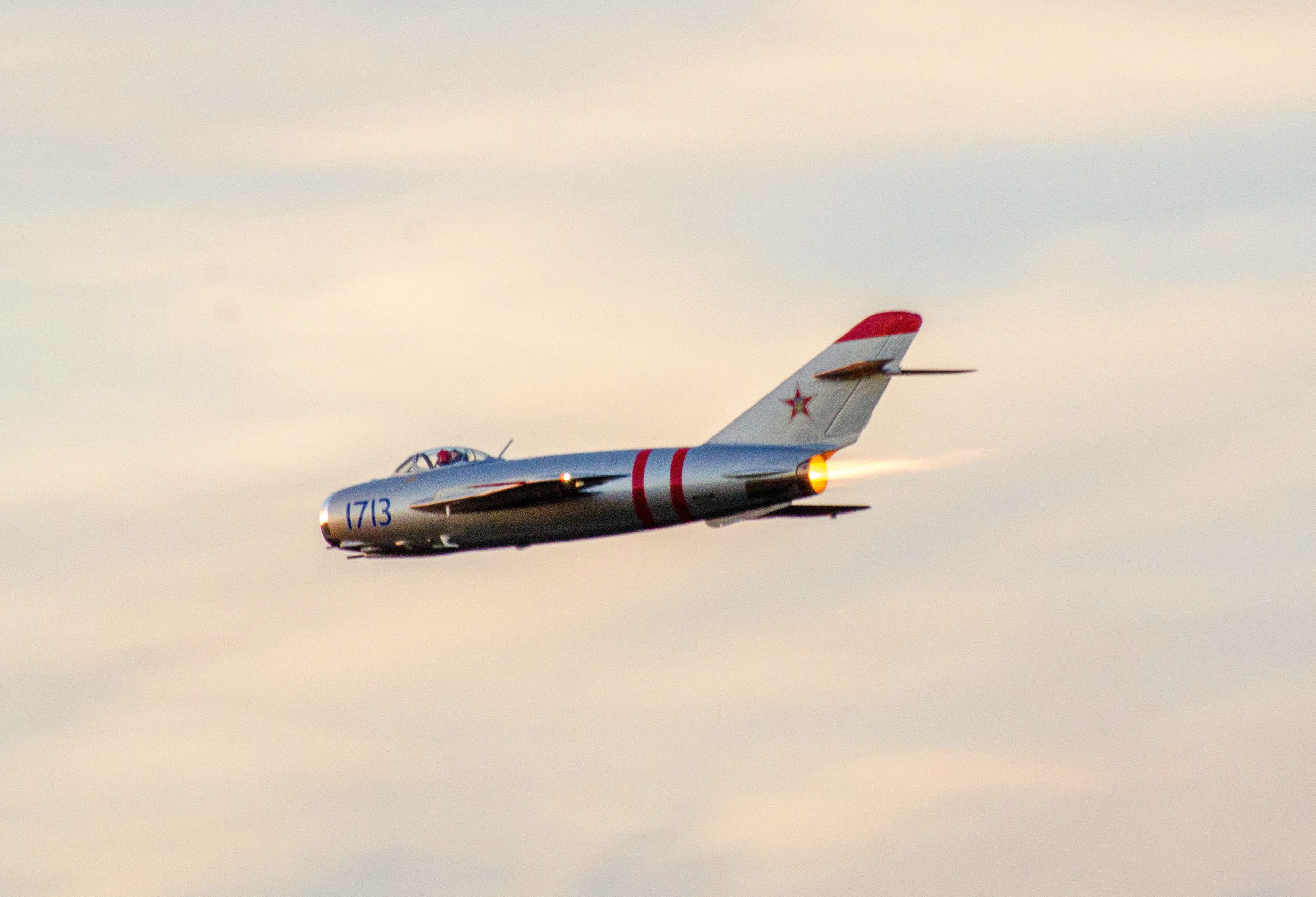
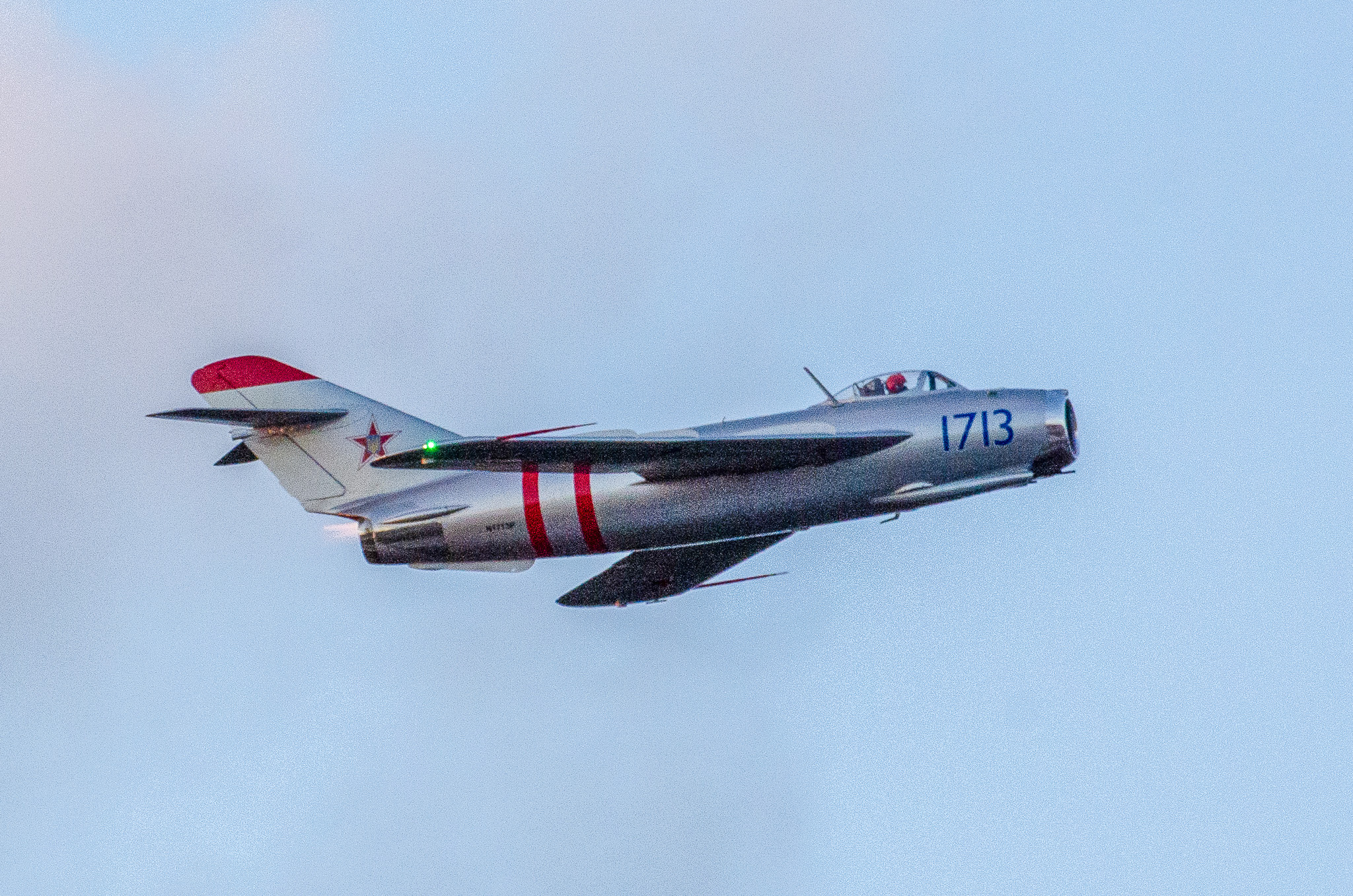
The MiG-17 Fresco surges forward as its pilot lights the afterburner during a demonstration flight at the 2024 Vero Beach Air Show. The sudden acceleration—brief, violent, and unmistakable—offers a glimpse into the raw performance that confronted U.S. pilots during the early jet age, long before beyond-visual-range combat or modern avionics. In that instant, air combat was about energy, timing, and nerve—nothing cinematic, just physics and consequences.
Vero Beach, Florida — May 2024 Nick Murgo
A A-10 Thunderbolt II “Warthog” sits on the ramp with canopy open prior to its demonstration at the 2024 Vero Beach Air Show. The aircraft was flown by Mary Lindsay “MAD” Johnson, then the U.S. Air Force A-10 Demo Team pilot, during what would become the final public demonstration season for the A-10. Crew markings beneath the cockpit list SSgt Tristan Devin (DCC) and SSgt Trystan Salgado (ADCC). The appearance came as the Air Force began winding down A-10 demonstration operations ahead of the aircraft’s planned retirement.
Vero Beach, Florida — May 2024
A jet MIG was an added bonus to the show
Fireworks explode across the night sky to close out the Friday Night Air Show at the Vero Beach Air Show. The aerial performances were capped by an amazing fireworks display, adding a dramatic finale to the opening night of the 2024 show.
Vero Beach, Florida — May 2024 NICK MURGO 2024_VERO
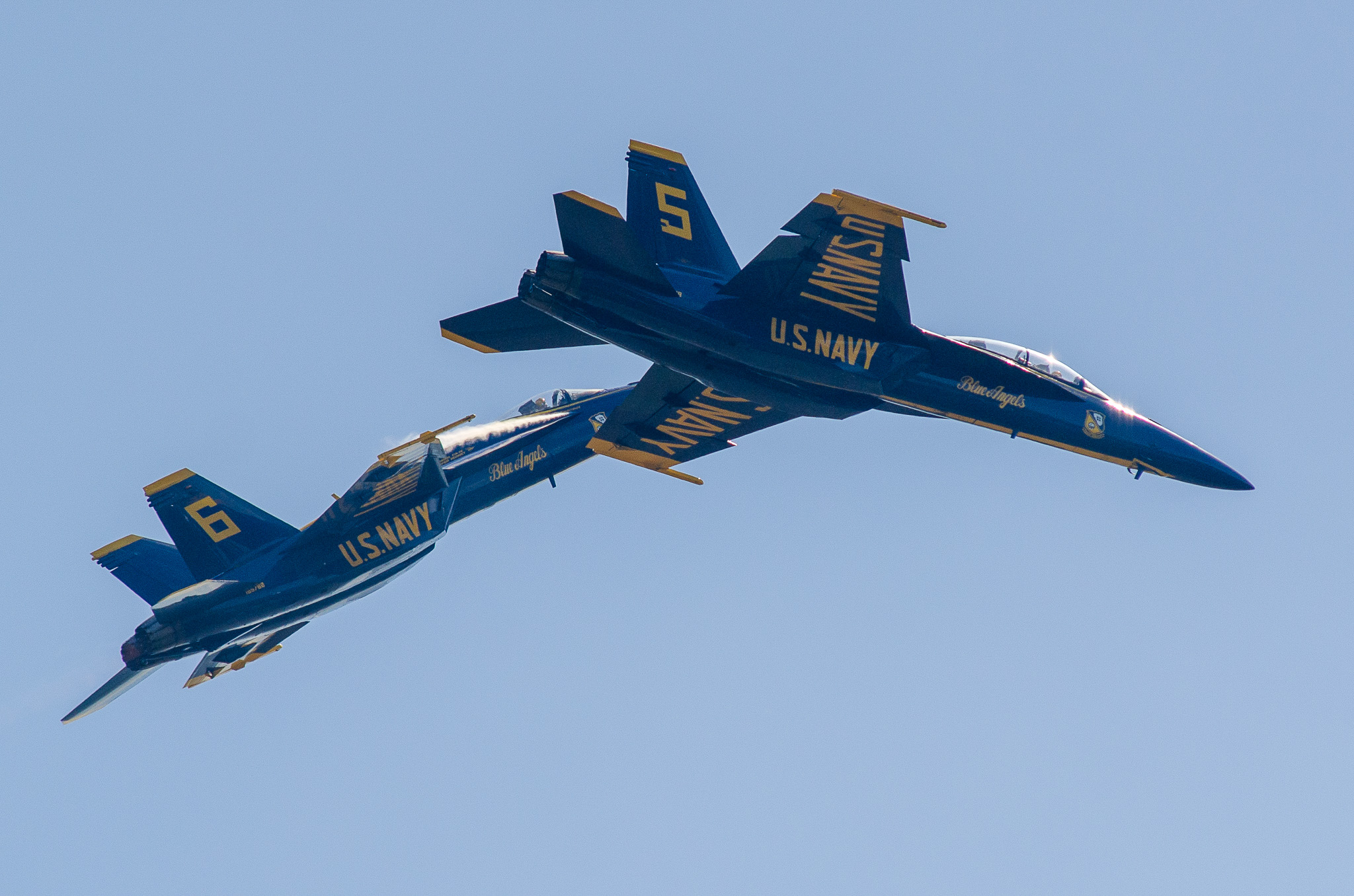
The U.S. Navy Blue Angels Opposing Solos, aircraft No. 5 and No. 6, hold tight, parallel lines moments before the Solo Break during their demonstration at the 2024 Vero Beach Air Show. Flying F/A-18 Super Hornet aircraft at high speed, the maneuver sets up a dramatic separation that demands precise timing, exact spacing, and strict altitude discipline prior to the opposing break.
Vero Beach, Florida — May 2024
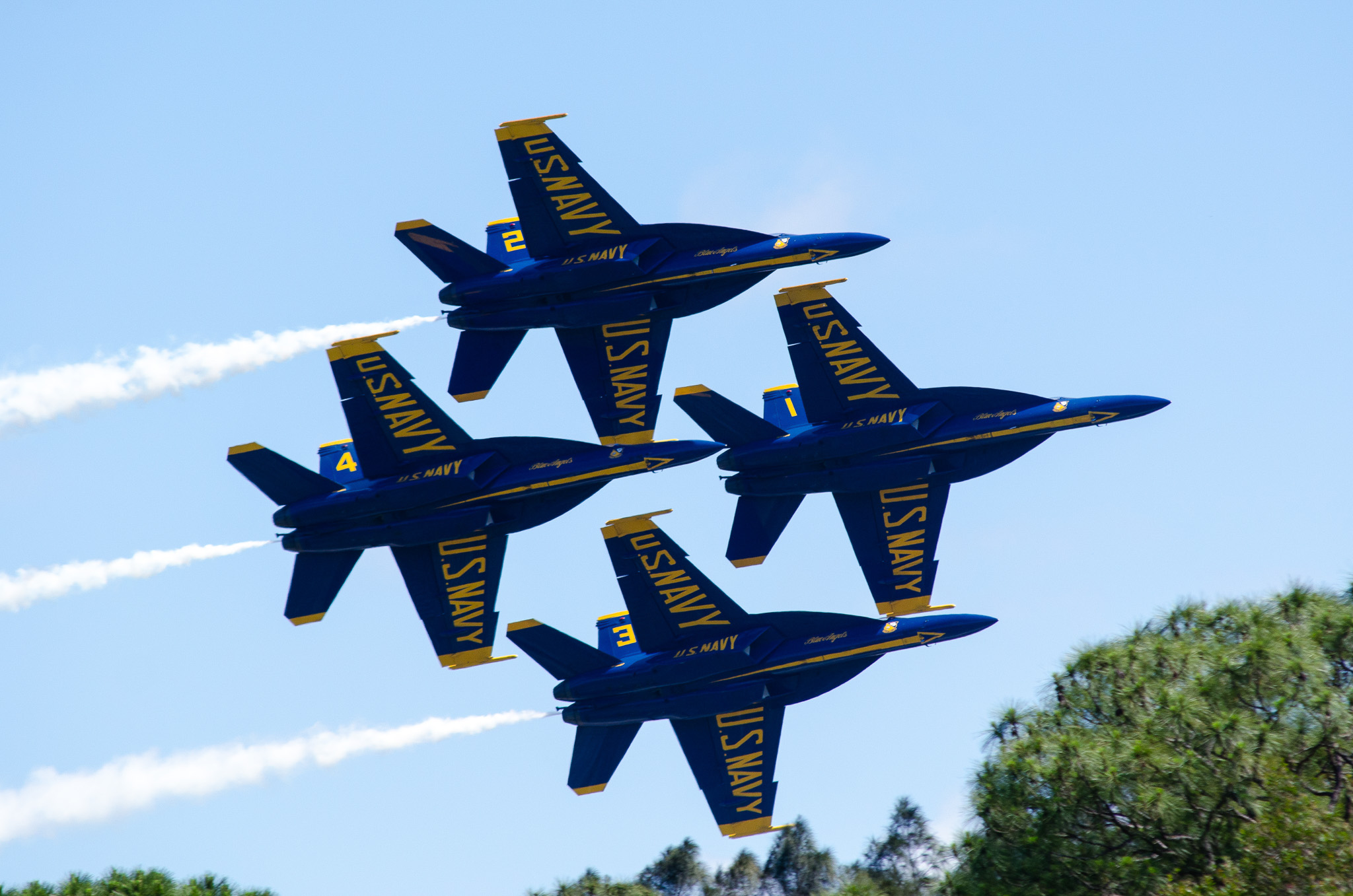
The U.S. Navy Blue Angels pass overhead in a compact diamond, the distinctive F/A-18 Hornet shape clearly defined from below. The twin engine intakes, centerline fuselage contours, and under-wing structures form clean aerodynamic channels—functional geometry designed to manage airflow at high speed, all revealed as the formation holds precise spacing just above the treetops. Nick Murgo May 2024
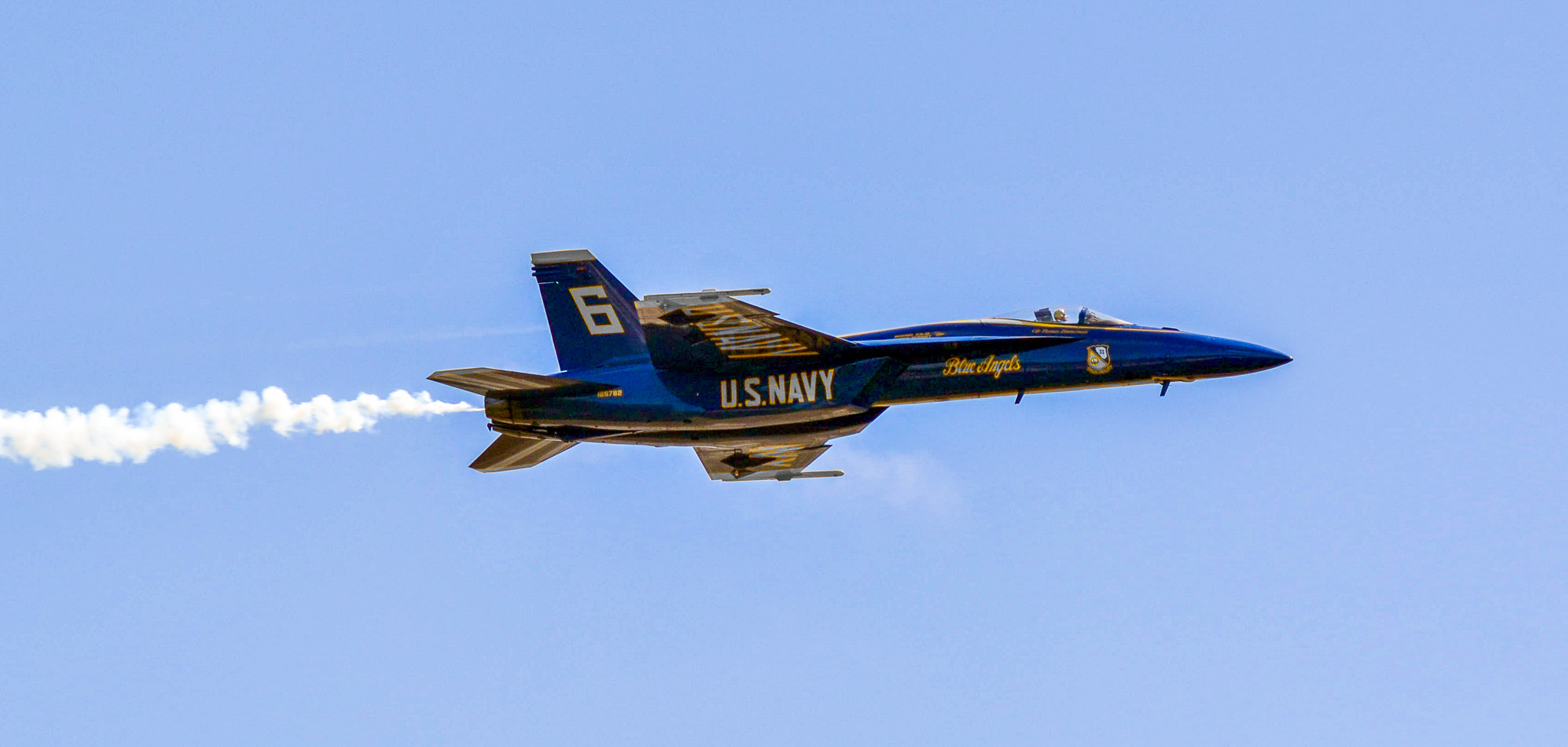
U.S. Navy Blue Angels Opposing Solo No. 6, flown by Cmdr. Thomas Zimmerman, streaks past in a F/A-18 Super Hornet during the 2024 Vero Beach Air Show. The pilot’s name is visible along the canopy rail, a detail that identifies the aviator assigned to the aircraft for the demonstration season. As an Opposing Solo, Cmdr. Zimmerman’s role centered on high-speed geometry, precise timing, and exact velocity control during the team’s most dynamic maneuvers.
Vero Beach, Florida — May 202 Nick Murgo
The U.S. Navy Blue Angels fly a tight diamond formation in F/A-18 Super Hornet aircraft during the 2024 Vero Beach Air Show. Passing low over the treetops—shown here for relative height—the formation highlights the precise altitude control, close spacing, and coordinated throttle management that define Blue Angels demonstrations.
Vero Beach, Florida — May 202 NICK MURGO
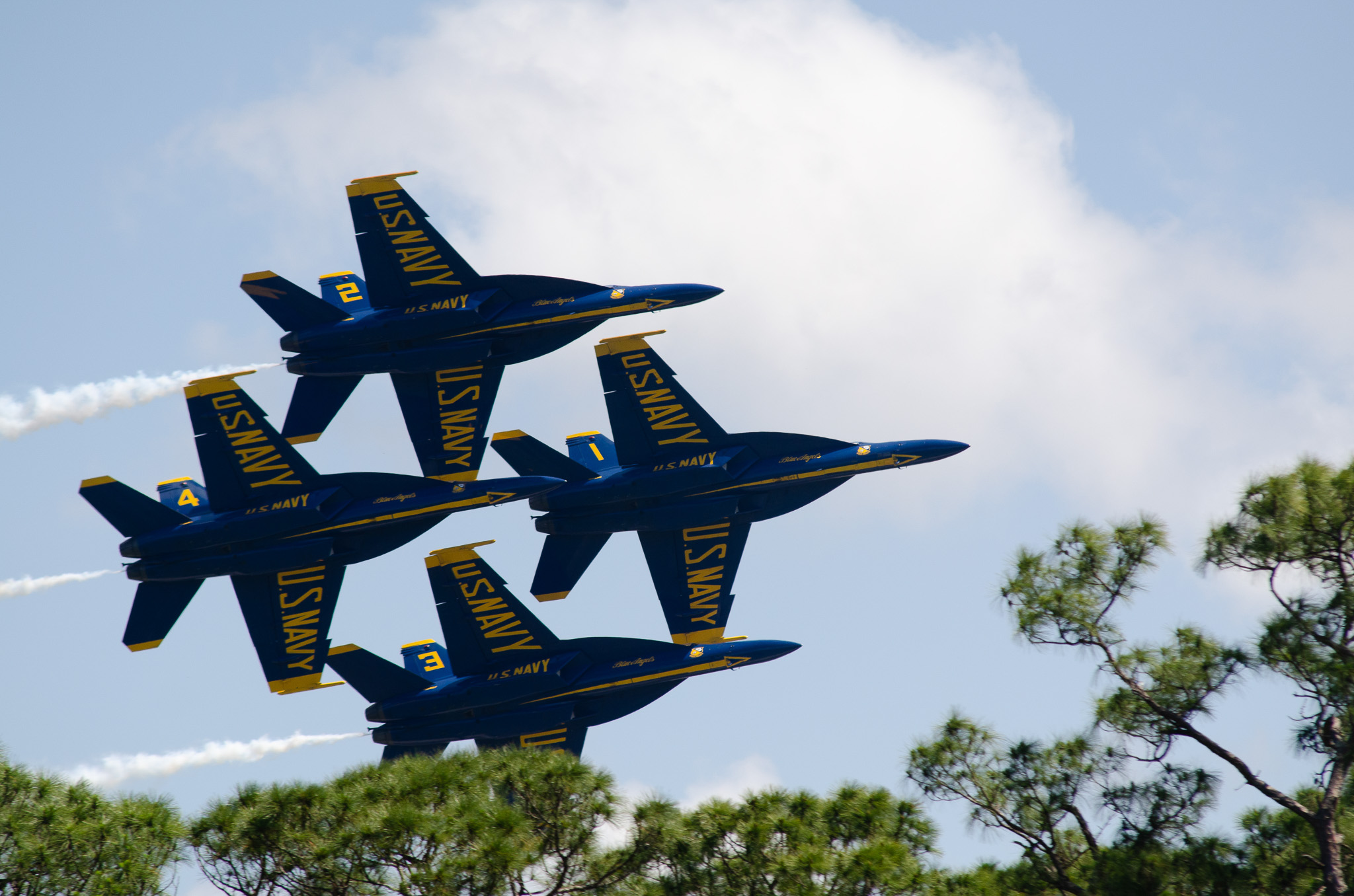
The U.S. Navy Blue Angels pass low in F/A-18 Super Hornet aircraft during the 2024 Vero Beach Air Show, their undersides briefly visible as the formation banks away. Foreground trees compress perspective and momentarily collapse depth, creating a striking visual effect while the aircraft maintain disciplined geometry and precise vertical separation throughout the maneuver.
Vero Beach, Florida — May 2024 Nick Murgo
The U.S. Navy Blue Angels hold a tight four-ship diamond in F/A-18 Super Hornet aircraft during the 2024 Vero Beach Air Show. The jets maintain parallel flight paths with near-constant lateral separation, their aligned fuselages and synchronized smoke lines revealing precise velocity matching, coordinated control inputs, and disciplined acceleration as the formation transitions together through the maneuver.
Vero Beach, Florida — May 2024 Nick Murgo